About
Services
Emergency Dentistry
Same-day care for pain, swelling, breaks and knocked-out teeth — including a $29* emergency exam.

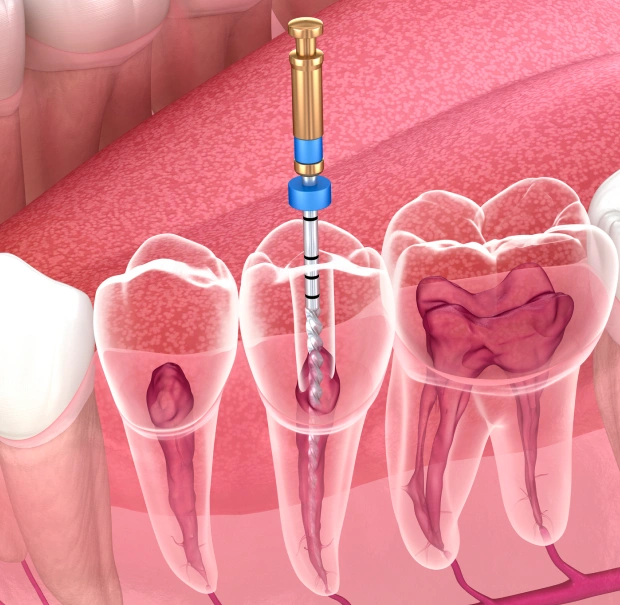
When a previous root canal hasn’t healed, retreatment is usually a better option than losing the tooth. Non-surgical and surgical approaches available.
Endodontic retreatment is a specialised procedure performed when a previously treated root canal fails to heal properly or develops new complications. It involves reopening the tooth, removing the original filling material, cleaning and disinfecting the canal system again, and resealing it.
We are experienced in retreating root canal cases that demand precision — whether the cause was a missed canal, a delayed crown or new decay reaching the existing filling.
Keeping your natural tooth preserves the bone around it and avoids the knock-on shifting of neighbouring teeth.
Retreatment is generally less expensive overall than extraction followed by an implant or bridge to fill the gap.
No surgical site to heal, no months of osseointegration, and no temporary gap in your smile.
A conservative alternative to removing the tooth, working through the existing access rather than surgically.
Dr. Matthew Le provides both non-surgical and surgical options. If you are still experiencing tooth pain or extreme sensitivity after a previous root canal, he will determine which route gives the tooth the best chance.
The tooth is examined thoroughly to confirm its structural integrity is sufficient to justify retreatment before the canals are cleaned and sealed. A temporary filling protects the tooth while it heals, ahead of the final restoration.
The cost varies depending on the complexity of the case, the number of canals treated and whether additional procedures such as a post or crown are necessary. It may be more involved than an initial root canal, which is reflected in the fee.
Insurance plans often provide partial coverage for retreatment. Our team will check your benefits and put together a financial plan that works for you before treatment begins.
Mild discomfort or sensitivity in the treated tooth for a few days is normal and can usually be managed with over-the-counter pain medication. Avoid chewing on the treated side until the final restoration is in place.
Good oral hygiene — brushing, flossing and regular dental visits — supports healing. In some cases we will schedule follow-up visits to monitor how the tooth is responding.
Where infection is present, acting quickly matters. Bacteria within the canal can spread and lead to abscess or bone loss, so early retreatment protects the adjacent teeth and supporting tissue as well as the tooth itself.
Everything below is handled by the same team, in the same two offices. Back to Endodontics.
Book online in under a minute, or call and talk to a real person at the front desk — whichever you prefer.