About
Services
Emergency Dentistry
Same-day care for pain, swelling, breaks and knocked-out teeth — including a $29* emergency exam.

Composite resin that is shade-matched to the teeth around it — so the repair disappears instead of announcing itself in every photograph.
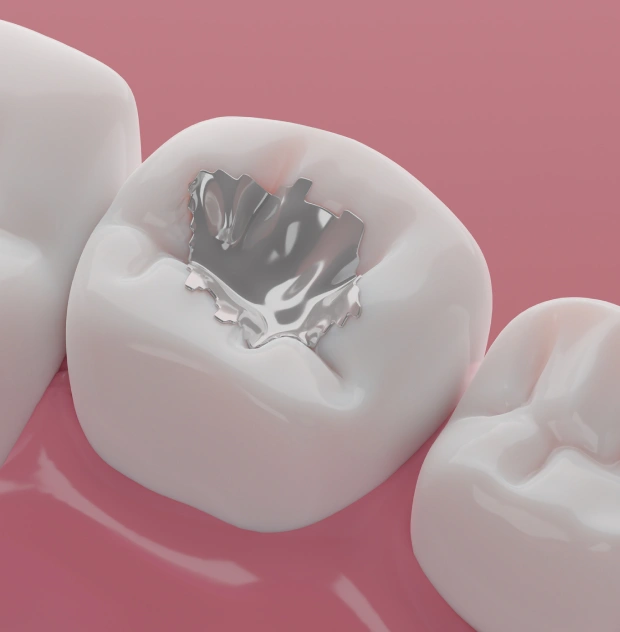
A tooth-coloured filling uses composite resin — a durable, tooth-shaded material bonded directly to the tooth — rather than the silver amalgam most of us grew up with.
Beyond appearance, composite bonds to the tooth structure itself, which means less healthy tooth has to be removed to hold the filling in place.
Your restorative dentist carefully selects a composite shade that matches the surrounding teeth. The area is then numbed thoroughly before anything begins.
All decayed tooth structure is located and removed, leaving a clean, sound surface for the restoration to bond to.
A bonding solution is applied, then composite resin is built up in layers, each hardened with a specialised curing light.
The filling is shaped to your natural anatomy, the bite is checked, and the surface is polished so it feels like the tooth it replaced.
As cosmetic dentistry has advanced, more people are considering replacing silver amalgam fillings with tooth-coloured composite. It is worth saying plainly: the decision to replace metal fillings, even ones that are still functioning, is a personal one.
Some patients choose to replace them to reduce potential mercury exposure. Others want to prevent the future tooth deterioration that can be caused by aging amalgam fillings as they expand, contract and eventually crack the tooth around them.
We will assess each existing filling and give you an honest opinion on which ones genuinely need replacing and which are best left alone for now.
Everything below is handled by the same team, in the same two offices. Back to Restorative Dentistry.
Book online in under a minute, or call and talk to a real person at the front desk — whichever you prefer.